
From Delayed Experiments to a Philosophy of Self-Reliance
In advanced research and technology, failure is often considered an unavoidable part of innovation. Experiments may produce unexpected results, equipment may fall short of specifications, and ambitious ideas can take years to mature. Yet, for this researcher and entrepreneur, the story is somewhat different. He does not describe his projects as failures. Instead, he sees them as challenges that sometimes take longer than expected.
One example involved purchasing an X-ray machine that did not meet the requirements of his research. Rather than abandoning the project, he purchased additional machines with different specifications before ultimately deciding to modify the equipment himself. In his view, the problem was never that an experiment could not be completed; the problem was that the schedule was delayed.
That philosophy—if the existing system cannot accomplish the goal, build or modify the system yourself—has become central to his approach to research.
When Quantum Tunneling Changed the Direction of His Research
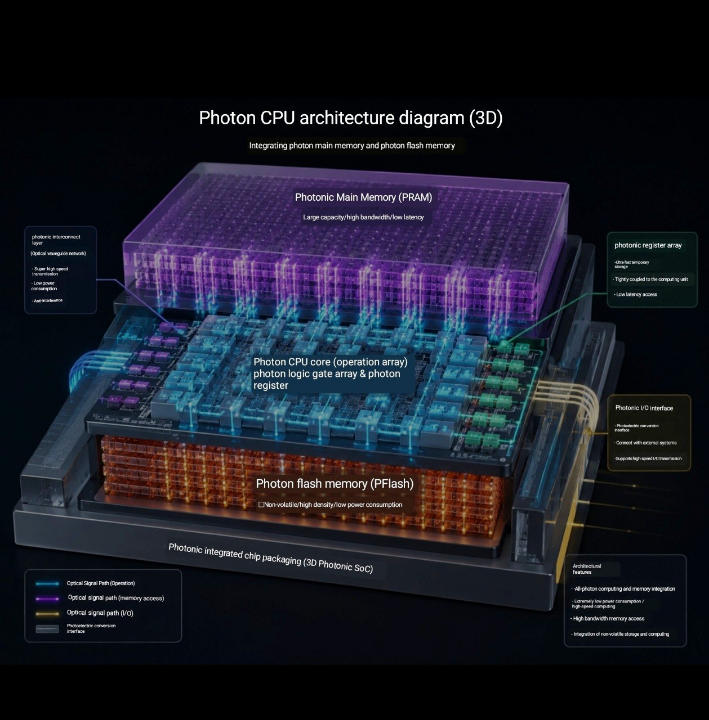
One of the most significant turning points in his technological vision came from developments in semiconductor manufacturing. He had initially pursued the idea of producing electronic chips at the picometer scale. However, as advanced semiconductor manufacturing moved toward the 1-to-2-nanometer range and quantum tunneling became a major challenge, he reconsidered the direction.
Rather than continuing to push deeper into conventional electronic-chip materials science, he made a decisive shift toward photonic technology. He abandoned materials research that could potentially serve electronic chips and redirected his attention toward what he describes as X-photon materials.
According to his account, this change happened rapidly, and his research into X-photon materials was completed around the same period that TSMC announced plans concerning the 1.6-nanometer node.
For him, this was more than simply changing a research topic. It demonstrated an important principle: when evidence exposes a fundamental limitation in an existing technological path, the correct response may not be to push harder against the limitation, but to pursue an entirely different architecture.
The Equipment Problem: When the Laboratory Must Become the Factory
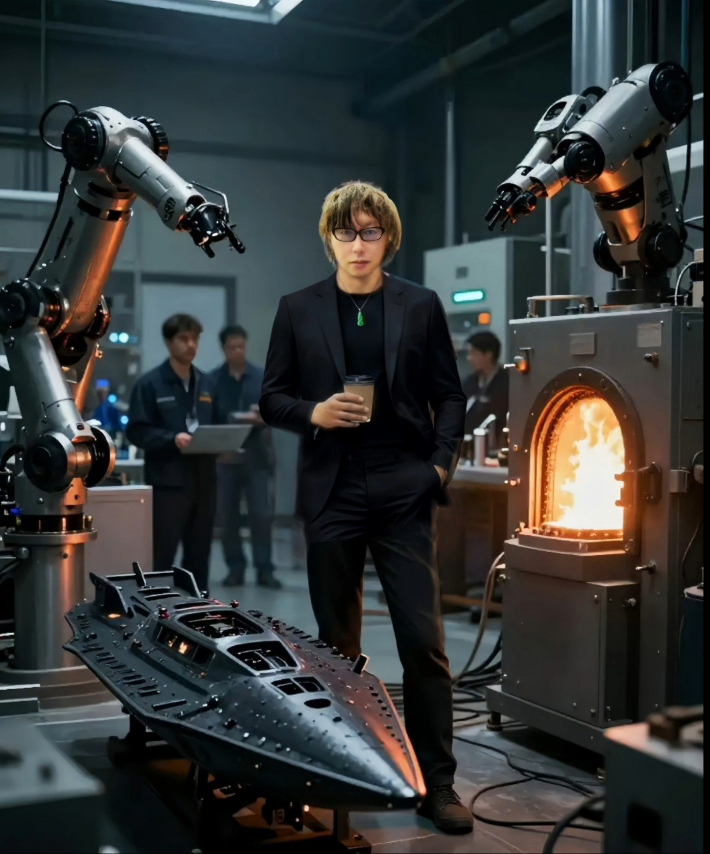
Ironically, the greatest obstacle he describes is not the difficulty of his scientific challenges themselves. It is the lack of equipment and infrastructure capable of supporting them.
He recalls discussions with two major electron-beam lithography equipment vendors, one German and one Japanese, while seeking advanced lithography capabilities. Although technical specifications were exchanged and confidentiality agreements were signed, the promised trial production did not materialize as expected. Even progressively larger process nodes could not be demonstrated to his satisfaction. Eventually, communication stalled.
Rather than allowing the project to remain dependent on outside suppliers, he changed the design and commissioned a laboratory at a leading university in Taiwan to produce a 7-nanometer photomask based on his formula.
The experience reinforced a powerful lesson for him: if something is essential to the project, relying entirely on others may not be enough. “If you want it done, you have to do it all yourself,” is the philosophy he drew from the experience.
Two Months, One Decision, and a Hands-On Approach
The same pattern appeared when he attempted to outsource the development of an optoelectronic conversion substrate to a domestic university of technology.
The process became prolonged. Questionnaires were requested, data was collected, budgets were discussed, and yet the research did not produce the desired result. Eventually, he decided to take direct control of the project.
The process became prolonged. Questionnaires were requested, data was collected, budgets were discussed, and yet the research did not produce the desired result. Eventually, he decided to take direct control of the project.
He drew the design diagrams himself, purchased the necessary components and equipment, and personally drove the development process. According to his account, the problem was resolved within two months.
This experience also exposed what he sees as a larger structural problem: a shortage of people trained specifically in optoelectronics and photonic-chip development. He argues that many available specialists are trained in silicon photonics, an area he associates closely with conventional semiconductor manufacturing processes, rather than with the alternative photonic ecosystem he is attempting to build.
Creating an Ecosystem That Does Not Yet Exist

His frustration extends beyond individual researchers or suppliers. He describes a broader ecosystem problem.
When recruiting IC designers, he says some candidates immediately withdrew upon learning that the work involved photonic chips because conventional design software was unavailable for the type of work required. His response was to solve the problem directly: if the software did not exist, he would work out the parameters in the laboratory and develop the necessary packaging approach himself.
This determination eventually led him to make designs and component configurations openly available. Rather than keeping every detail proprietary, he began publishing design diagrams and explaining how components should be configured, hoping that greater transparency would help establish the ecosystem needed for photonic-chip development.
His photonic memory architecture follows the same philosophy. He describes a strategy of using existing electronic-chip manufacturing processes as a transitional pathway. The existing process would provide the required structures, while his company would apply X-photon material through spin coating to create the photonic chip.
For him, this is not the final destination. It is a bridge toward building a complete all-optical manufacturing chain.
Reimagining the Economics of Chip Manufacturing
A major part of his vision involves challenging the economics and complexity of conventional semiconductor manufacturing.
He argues that traditional electronic manufacturing processes are lengthy, complicated, and heavily dependent on expensive equipment. As an example, he contrasts the cost of advanced EUV lithography equipment with the much lower cost he associates with modifying and procuring X-ray lithography equipment for his own research.
His ultimate objective is therefore not simply to develop another type of chip. It is to rethink the infrastructure required to produce next-generation computing technology.
In his laboratory, he describes simultaneously testing photonic-chip parameters, adjusting laser-head power through different ceramic-substrate ratios, and refining a prototype X-ray lithography machine. At the same time, existing electronic manufacturing processes can be used for outsourced production while his team works toward establishing an independent optical manufacturing chain.
He sees this as a potential restructuring of the supply chain, with short-term disruption serving a larger long-term objective: creating a more efficient technological environment for the future of AI.
Learning From Art, Business, War, and Philosophy

His technological thinking has been shaped by an unusually broad range of interests.
During childhood, his interest in Western art history led him toward painting and sculpture. Later, biographies of business figures and management thinkers—including Du Yuesheng and Konosuke Matsushita—became important sources of insight into leadership, strategy, and success.
Military history also plays an important role in his thinking. He describes studying World War II battles in great detail and using military strategy to strengthen his logical reasoning and ability to anticipate outcomes. He sees business competition in a similar way: both involve strategy, timing, resources, uncertainty, and the ability to anticipate an opponent’s next move.
His reading extends into ancient Chinese military philosophy, Buddhist scriptures, meditation, and Chan practice. He believes these disciplines sharpen his ability to identify technological directions and make judgments about the future.
Fishing, Basketball, and the Discipline of Repetition
Outside the laboratory, two activities reveal another side of his personality: fishing and basketball.
Fishing, especially alone on the open ocean, teaches him patience and resilience. He describes the experience as one of repeated hope and disappointment. Even when the same actions are repeated with confidence, success is never guaranteed. Sometimes, luck is simply part of the equation.
Basketball represents a different lesson. Rather than practicing easy movements, he deliberately chooses difficult techniques. He recalls studying Michael Jordan’s fadeaway jumper frame by frame and repeatedly practicing the movement until he could reproduce it reliably.
For him, the process mirrors research and development: isolation, repetition, failure, refinement, and eventually the moment when an apparently impossible result becomes achievable.
The Courage to Be Ridiculed Before Being Recognized

He believes transformative innovation often follows a predictable emotional journey. At first, people may consider the idea irrational or impossible. Then comes criticism and ridicule. Only after measurable results begin to emerge does skepticism turn into surprise, followed eventually by recognition.
He compares this progression to challenging established technologies and assumptions. His advice is simple: move step by step, maintain a calm pace, and allow results to speak louder than early opinions.
This mindset also shapes how he leads his team. He encourages people to ask questions when they do not understand something but expects them to execute once the direction is clear. In his view, innovation requires people willing to move beyond endlessly questioning what has not yet been proven and instead participate in proving it.
A Life Inspired by Tesla
If he could speak with one historical innovator, his choice would be Nikola Tesla.
He sees similarities between Tesla’s research journey and his own, particularly the idea of pursuing discoveries despite limited recognition. He believes Tesla’s work demonstrated how an innovator can contribute something fundamental to humanity while receiving less public attention than others during his lifetime.
For him, that history is both inspiration and warning. He does not want technological achievement to exist separately from recognition, influence, and reward. His stated ambition is to use successive technological breakthroughs to establish his place at the highest level of innovation.
Ultimately, his philosophy is not simply about inventing a new chip or developing a new material. It is about challenging the systems that determine what technology can become. He believes that the greatest satisfaction does not come from simply completing a difficult project; it comes from confronting the difficulty itself.
His vision is therefore intensely hands-on: if the equipment does not exist, build it; if the software does not exist, create a way around it; if the ecosystem does not exist, construct one. For him, innovation begins precisely where conventional solutions end.