

From overcoming laboratory setbacks and designing equipment from scratch to pursuing photonic computing, advanced energy systems, and unconventional propulsion, one researcher’s journey is defined by a simple conviction: when the tools do not exist, create them yourself.
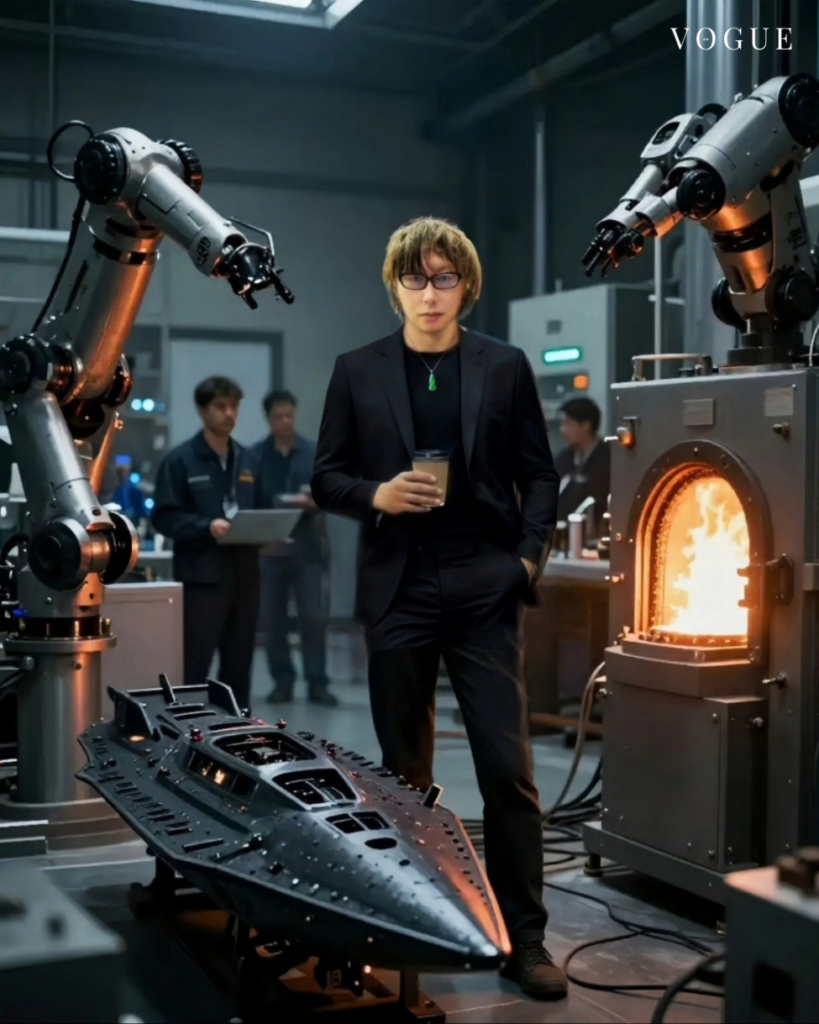
Innovation rarely follows a straight line. In laboratories around the world, promising experiments fail, equipment proves inadequate, suppliers miss deadlines, and ideas that appear technically achievable can take years to translate into practical results. For one researcher and entrepreneur, however, these obstacles are not failures in the conventional sense. They are delays, challenges, and invitations to find another route.
That distinction lies at the heart of his philosophy of research.
Rather than abandoning a project when an experiment does not produce the desired outcome, he describes a process of modifying equipment, changing materials, redesigning systems, and, when necessary, taking direct control of the work. His approach is intensely self-reliant: if an essential tool cannot be purchased, build it; if a supplier cannot deliver, redesign the process; and if an ecosystem does not yet exist, begin constructing one.
This philosophy has guided a technological program that extends from photonic chips and advanced materials to energy storage and highly unconventional concepts of propulsion.
When Equipment Becomes the First Problem
One of the clearest examples of this approach involves an X-ray machine purchased for research purposes.
The equipment did not meet the specifications required for his experiments. Instead of abandoning the research, he purchased additional machines with different capabilities in an attempt to find a workable solution. When those efforts still failed to provide the desired result, he decided to modify the equipment himself.
For him, the experience illustrated a fundamental principle: the experiment itself was not necessarily impossible. The problem was that the available tools were not suited to the task.
That distinction has influenced his approach ever since. A delayed result is not necessarily a failed result. Sometimes the real challenge is creating the infrastructure necessary to make the experiment possible.
When Quantum Tunneling Changed the Direction of Research
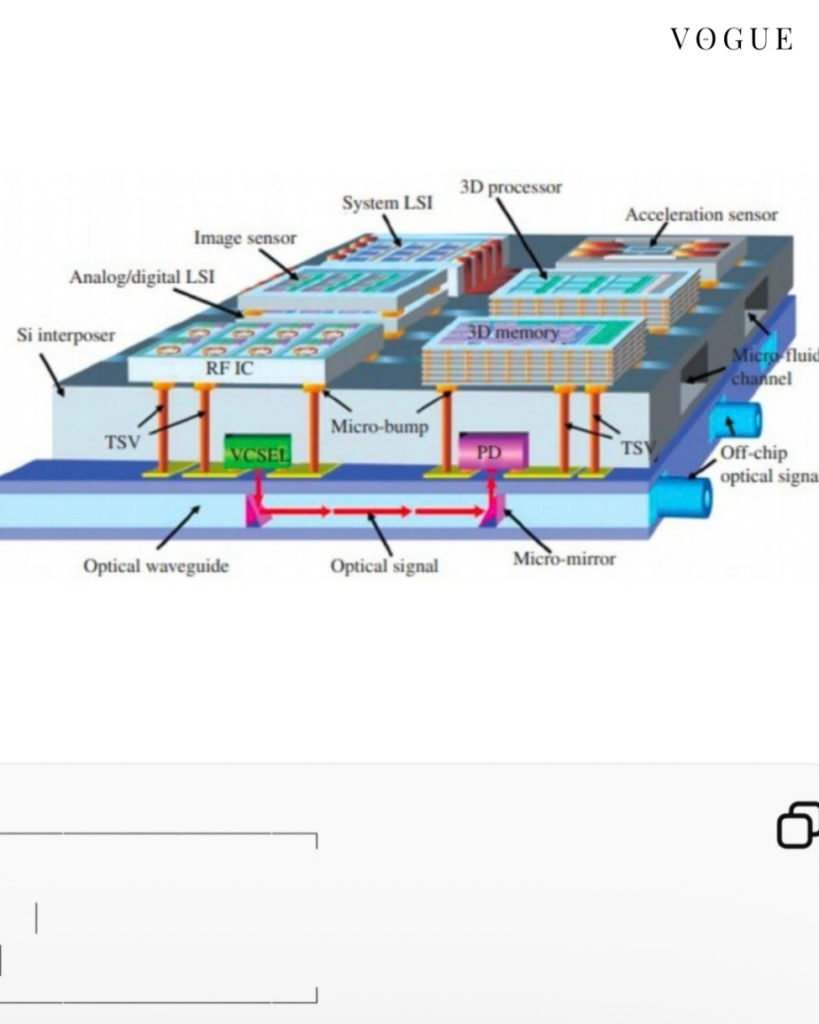
A major change in his technological thinking emerged from the increasingly difficult challenges facing conventional semiconductor manufacturing.
He initially explored the possibility of developing electronic chips at extremely small scales, including dimensions approaching the picometer range. As semiconductor manufacturing moved toward increasingly advanced nanometer-scale processes, however, quantum mechanical effects became an increasingly important consideration.
Quantum tunneling is a well-established physical phenomenon in which particles can pass through barriers that classical physics would normally prevent them from crossing. At extremely small dimensions, such effects can create significant challenges for conventional electronic devices.
Rather than continuing indefinitely along the same path, the researcher says he reconsidered the architecture itself.
His response was to turn toward photonics.
The central idea was that, instead of continually reducing electronic structures and attempting to control increasingly difficult electron behavior, information could potentially be processed or transmitted through photons.
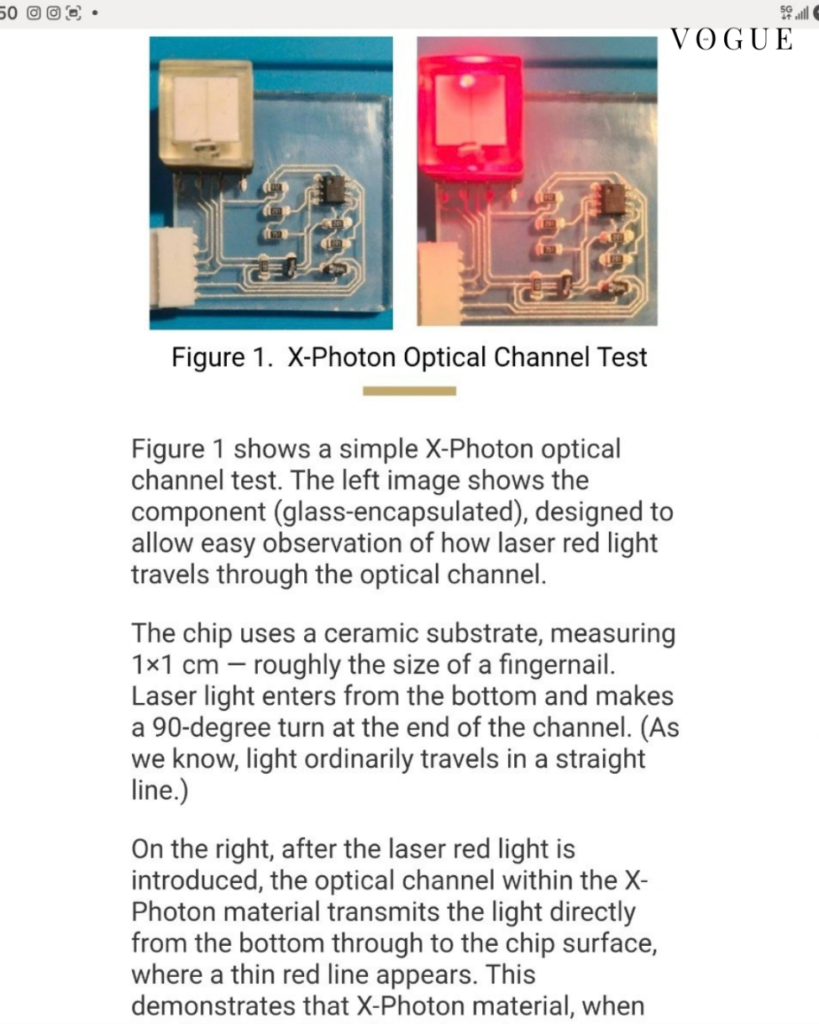
This shift became the foundation for his research into what he calls “X-photon” materials.
From Conventional Research to X-Photon Materials
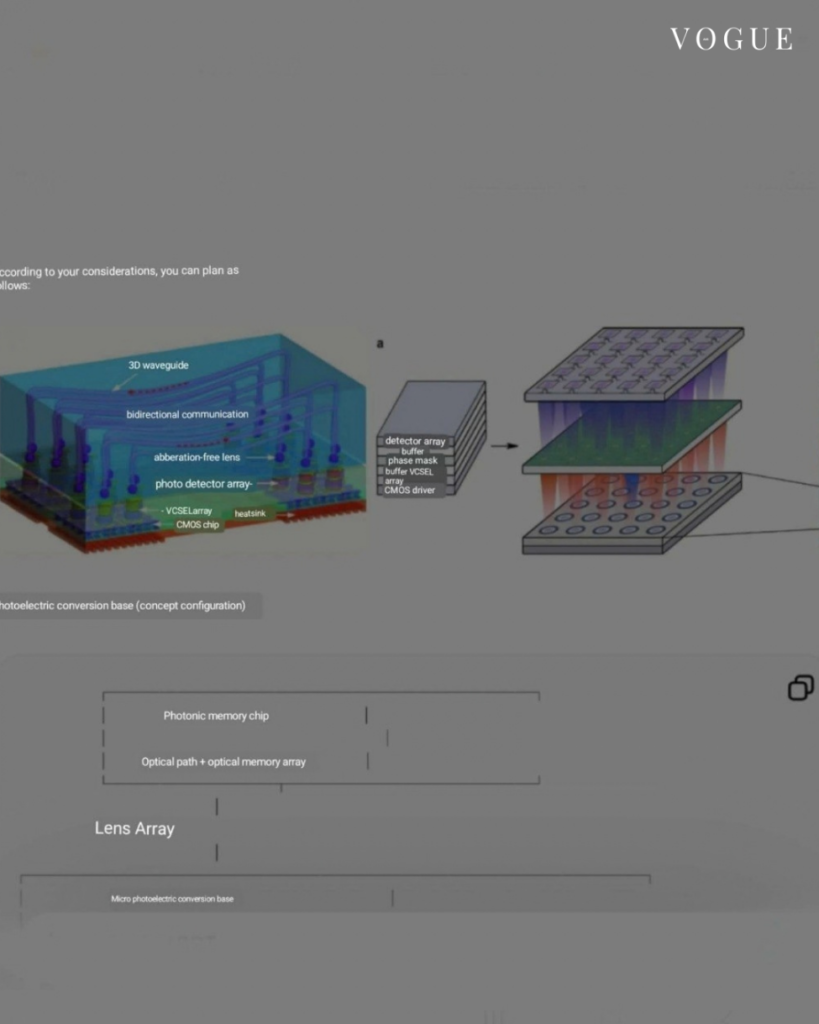
According to his account, the development of X-photon materials represented a major redirection of his work.
He describes the material as being capable of supporting extremely short-wavelength optical applications and sees it as a potential foundation for a different generation of computing technology.
The broader concept involves replacing or supplementing electron-based information processing with optical pathways.
Photonic computing itself is an active field of scientific and engineering research, with researchers investigating ways to use light for communication, computation, and data processing. The specific properties and capabilities attributed to the proprietary X-photon material, however, remain claims of the company and would require independent technical verification.
For the researcher, the significance goes beyond a single material.
It represents a broader philosophy: when an existing technological architecture encounters fundamental limitations, progress may require changing the architecture rather than simply optimizing it.
When the Laboratory Must Become the Factory
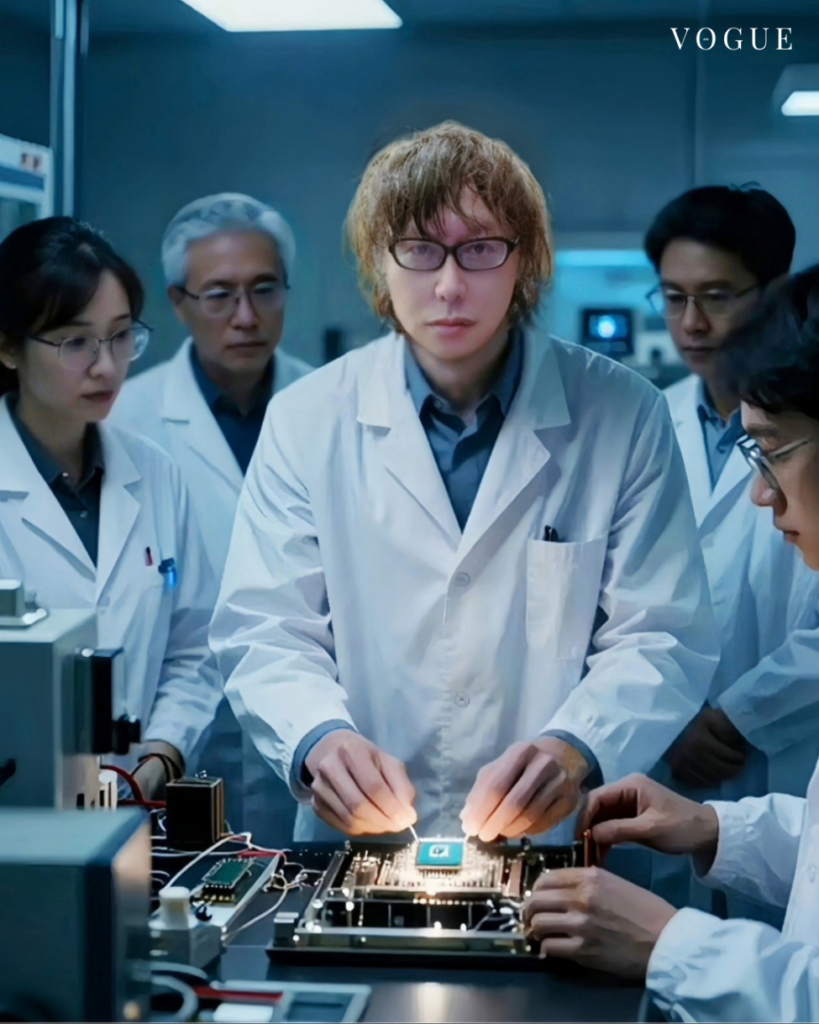
The same philosophy emerged during attempts to acquire advanced lithography capabilities.
The researcher describes discussions with two major electron-beam lithography equipment manufacturers, one based in Germany and another in Japan. Technical information was exchanged and confidentiality agreements were signed, but the expected trial production did not materialize according to his requirements.
Eventually, communication stalled.
Rather than allowing the project to remain dependent on external suppliers, he changed direction. He commissioned a laboratory at a leading university in Taiwan to produce a 7-nanometer photomask based on his own formula.
The experience reinforced one of his central beliefs: critical technological capabilities cannot always be outsourced.
If a component is essential to the research, dependence on another organization can become a bottleneck. Building the capability internally—or finding an alternative route—can therefore become part of the research itself.
Two Months and a Hands-On Solution

A similar experience occurred during an attempt to develop an optoelectronic conversion substrate through a domestic university of technology.
The project involved questionnaires, technical discussions, data collection, and budget considerations, but progress did not meet expectations.
Eventually, the researcher took direct control.
He prepared the design diagrams, purchased the necessary components and equipment, and personally coordinated the development. According to his account, the desired result was achieved within approximately two months.
The episode reinforced another concern: the shortage of specialists trained specifically in the type of photonic technology he is attempting to develop.
He argues that much of the available expertise is concentrated in silicon photonics and conventional semiconductor-related technologies, leaving fewer people experienced in alternative photonic architectures.
Building an Ecosystem From the Ground Up

The challenge, in his view, is therefore larger than creating a chip.
A technological platform requires an ecosystem: designers, manufacturing processes, software, packaging technologies, testing equipment, materials, suppliers, and technical standards.
He recalls attempting to recruit integrated-circuit designers who withdrew after discovering that conventional design software did not readily support the type of photonic-chip work he envisioned.
His response was characteristic.
Rather than waiting for the software ecosystem to develop independently, he began working out parameters in the laboratory and developing alternative approaches to packaging and design.
He subsequently made some design diagrams and component configurations openly available, with the goal of encouraging other researchers and engineers to participate in developing the ecosystem.
In his view, transparency can sometimes accelerate technological development when an industry is still too young to possess all the necessary infrastructure.
A Transitional Path to Photonic Manufacturing

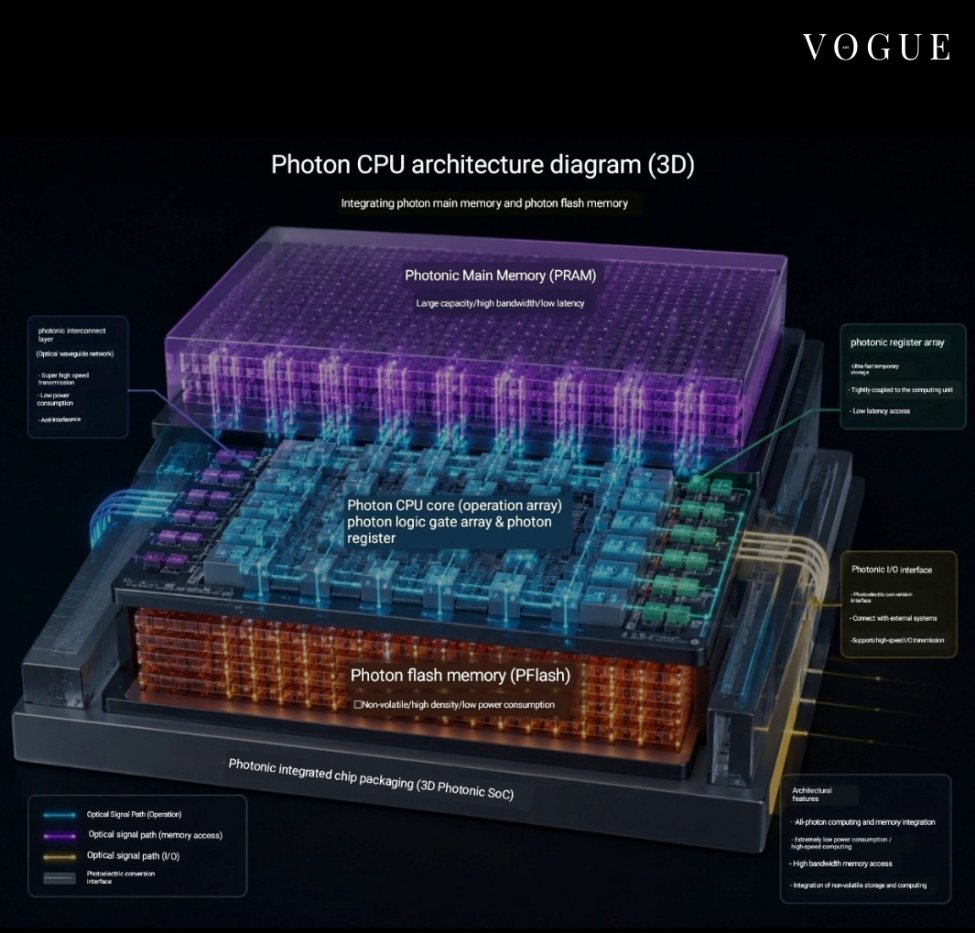
The company’s proposed photonic-memory architecture reflects the same pragmatic philosophy.
Rather than immediately attempting to create an entirely new manufacturing infrastructure, the researcher describes using existing electronic-chip manufacturing processes as a transitional pathway.
Existing fabrication techniques could create the required structures, after which X-photon material would be applied through a process such as spin coating.
The long-term objective, however, is more ambitious: to establish a manufacturing chain specifically optimized for optical computing.
This approach illustrates the difference between technological vision and practical implementation. A completely new manufacturing ecosystem could take years to build, while adapting existing infrastructure may provide a bridge between today’s technology and a potential future architecture.
Challenging the Economics of Computing

The researcher also questions the economics behind modern chip manufacturing.
Advanced semiconductor production requires highly specialized equipment, sophisticated fabrication facilities, controlled environments, and enormous capital investment. He argues that alternative photonic manufacturing methods could potentially reduce some of these requirements.
His laboratory work therefore focuses simultaneously on materials, optical parameters, ceramic substrates, laser-head power, lithography equipment, and manufacturing processes.
The objective is not merely to produce a different kind of chip but to reconsider how advanced computing hardware might be manufactured.
He sees this as particularly relevant to the future of artificial intelligence, where demand for computing power continues to grow.
His broader argument is that the next generation of AI infrastructure may require fundamentally different approaches to energy consumption, processing speed, and manufacturing cost.
A Philosophy Shaped by Art, Business, and History

The researcher’s approach is not limited to engineering.
He describes childhood interests in Western art history, painting, and sculpture as important influences on his creative thinking. Later, biographies of business leaders and management thinkers became sources of lessons about leadership, strategy, and persistence.
Military history also occupies an important place in his intellectual framework.
He has studied major battles of the Second World War and sees parallels between military strategy and business competition. Both, in his view, involve resource allocation, timing, uncertainty, strategic positioning, and anticipating what others may do next.
Ancient Chinese military philosophy, Buddhist texts, meditation, and Chan practice have also influenced his thinking.
Together, these interests have contributed to an approach that combines technical experimentation with broader philosophical reflection.
Lessons From Fishing and Basketball

Even his recreational interests have become part of his philosophy of research.
Fishing alone on the ocean has taught him patience. Every cast carries an expectation of success, yet the result is never guaranteed. Repetition does not eliminate uncertainty, and luck remains a factor.
Basketball provides a different lesson.
He recalls studying Michael Jordan’s fadeaway jump shot frame by frame and practicing the movement repeatedly until he could reproduce it.
The lesson is familiar to both athletes and researchers: complex performance emerges through repetition, observation, correction, and persistence.
For him, the laboratory follows the same pattern.
An experiment may fail repeatedly, but every failure provides information about what needs to change.
The Willingness to Be Ridiculed
The researcher also believes that unconventional ideas often pass through several stages before gaining acceptance.
Initially, an idea may be dismissed. Then it may attract criticism or ridicule. If measurable results eventually appear, skepticism can give way to curiosity and, potentially, recognition.
This belief has encouraged him to pursue projects that he says others considered unrealistic.
His philosophy is not that every unconventional idea is automatically correct. Rather, he believes that ideas should be tested rather than rejected solely because they challenge existing assumptions.
That distinction is particularly important for his most ambitious projects, where extraordinary claims require equally extraordinary evidence.
Inspired by Nikola Tesla
If given the opportunity to speak with one historical innovator, the researcher says he would choose Nikola Tesla.
Tesla represents, in his view, the archetype of an inventor who pursued unconventional ideas and contributed to technologies that transformed modern society.
The comparison also reflects the researcher’s own ambition: to pursue fundamental technological breakthroughs rather than incremental improvements alone.
He hopes that successive developments in photonic materials, computing, energy, and other technologies will eventually establish his work as part of a larger history of innovation.
Beyond the Conventional Definition of Innovation

At its core, the researcher’s philosophy is remarkably simple.
If the equipment does not exist, build it.
If the software is unavailable, find another solution.
If suppliers cannot deliver, redesign the process.
If qualified specialists are difficult to find, develop the expertise internally.
And if an entire technological ecosystem is missing, begin creating it.
This approach has shaped his work on photonic chips and extends into his broader technological ambitions, including advanced energy systems and unconventional propulsion concepts. Some of those claims remain speculative and would require rigorous independent testing before they could be accepted as established science.
Yet the philosophy behind the research is easier to understand.
For this researcher, innovation begins precisely where conventional solutions end.
The ultimate measure of his work will not be the boldness of its claims, nor the skepticism they provoke, but whether the proposed technologies can be independently reproduced, measured, manufactured, and demonstrated at meaningful scale.
Until then, the story remains one of persistence and radical self-reliance—a continuing attempt to turn technological obstacles into opportunities to build something new.